 bazhsw
3/30/2026

What a beautiful collection of fairy tale inspired short stories and poems.
The writing in this anthology is magical, it's intelligent, spell-binding, both wondrous and grounding at the same time. It is writing that sees possibility and magic everywhere but is also relatable, real, personal. This collection is a pleasure to read, it's gentle and takes the reader on a journey. They are ones we've heard before, but maybe the path is a little different. They are familiar and though we are never quite lost in the woods we know we are 'not here'.
I imagine there is quite an art to writing fairy tale and folklore retellings. Many of the pieces in here are not retellings in the purest sense, many could be better described as 'inspired by' and the collection is better for it. For books like this to work, there needs to be enough of the stories from our childhood to remember, but it can't be derivative, or just switching a few details around or adding a twist. There needs to be something different, something unique but with a shared DNA to a tradition or trope. One of the things I was continually impressed by was Goss's ability to have such a unique voice whilst still being rooted in the familiar. As I was reading the book, I felt I could hear a storyteller recount back to me all that had occurred in the tale and I was captivated by such simple storytelling.
Whilst I appreciated the poetry in the book, I think I enjoyed the longer fiction more. Like many fairy tales she will place them in historical, or geographical settings which in a Marvel movie looks stupid, but in a fairy tale makes sense. A country you can't find on a map, a time that feels familiar, alternative pasts. 'The Rose in Twelve Petals' does this well, imagining a different Sleeping Beauty and the impact of different European alliances and wars and how sometimes wisdom has to sleep through the folly of man.
'Blanchefleur' is the only story in the book which has a male protagonist and it's simplicity is beautiful. Goss asks a man to be brave, to care, to be knowledgeable and if he has these things and withstand ridicule from others he will possess riches (whether he desires them or not). It's clear it is a love story, a coming of age story and one where the peasant achieves everything. It follows a familiar three trial structure and as I was reading, I was finding I was caring for this 'simple man' an awful lot. It's hard not to feel affection for him and his feline companion.
'Red as Blood and White as Stone' is a wonderful story about a kitchen girl in a castle scrubbing away dreaming of princesses and something magical to happen. Like many of the stories in here you can work out quickly what will happen, but I loved the conclusion of the story, taking us into Europe in the 1930's and 1940's and exploring not just the trauma of the second world war but responses to it. I wouldn't like to guess Goss's politics but I know she is from Hungary and lived in many European countries. I can read in some of her stories the legacy of warring nation states, the influence of Empire, of fascism and state socialism on Hungary and surrounding countries. It is a time when people perhaps wished for magic to be real, and the perspectives of the people is given greater prominence than those of kings and queens.
Two of the stories feel somewhat autobiographical (to an extent anyway). 'The Other Thea' is about a magic school graduate who has lost her shadow and needs to find it to be the witch she is. It's more than finding our 'wicked' side. It's about finding that part of us that is non-compliant, that is creative, that takes risks, that refuses to conform. I imagined this from the perspective of the 'good girl', the compliant well-behaved studious young woman who can only be complete when she finds her wildness, her feminine power. I read it as much about the power of emotion and the dangers of suppressing it.
'A Country Called Winter' feels like one of those schmaltzy Christmas films you see on streaming sites - and again you can see the plot coming, but I loved the way it weaved a 'maybe mythical country' called Winter, with the importance of Winter and how change and transition is normal, that we need life and death. Similar to 'The Other Thea' there is a theme of things being stuck, and not letting go. I somewhat playfully decided this story is really about having one's heart broken in our youth and struggling to get over it, and that we should celebrate darkness, cold and winter, but not be stuck there.
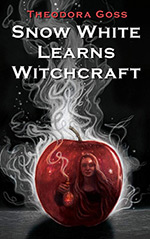
The poems are decent too - I got a kick out of the interpretations of 'The Princess and the Frog' and also 'Snow White Learns Witchcraft' - both poems which ask a woman to decide what she wants, to pursue a path and they decide the opposite from what the fairy tale normally suggests. Some are dark, like 'The Ogress Queen' and some are lots of fun like 'Goldilocks and the Bear' which is really about that sense that you're dating someone 'wrong for you, but ever so right'. I smiled at the concept of Goldilocks being a bit of thief and bad news, but cool with it.
Some of the commentary around this collection describe it as 'feminist retellings'. That's correct, but I prefer the broader concept of 'varying perspectives of women and girls' and in that respect they are relatable to everyone. The themes of Maiden, Mother and Crone weave throughout, and the old woman in the woods is a powerful motif, as is the girl at the edge of womanhood. The themes feel universal, and it makes me think that choosing women and girls as protagonists and the voice Goss gives them makes this book incredibly accessible and human.
I'd love to read more of Goss in future - highly recommended