 BigEnk
7/15/2026

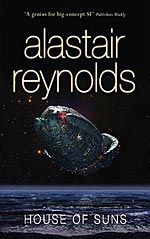
Abigail Gentian, the only sane member of her family line, is the heiress to an immense fortune built off the back of weaponized cloning technology. She comes of age in a vast and ever-changing house with hardly any company to speak of other than her caretaker, a nameless boy from another affluent family, and an immersive VR simulation of a fantasy world that becomes more and more central to her life. Years later she decides to split her memories into 100 identical clones (or shatterlings), half male, half female, who have absurdly long lifespans. Abigail's strong sense of curiosity and thirst for knowledge is passed down seamlessly, and the group more-or-less falls into a pattern of observing the rise and fall of "turnover" civilizations throughout the galaxy, coming back together for periodic family reunions to synchronize their memories into a greater consciousness. The majority of the plot takes place millions of years in the future as Abigail's 'line' of clones uncover a mysterious plot against their very existence.
Out of the three works from Reynolds that I've read, this is the best by at least one standard deviation. Sure, all of Reynolds sore spots still crop up, (bloated/in need of an edit, unremarkable prose, and a perchance for over explaining/repetition) but House of Suns is carried by its absolute smorgasbord of neat space opera ideas and moments. All of these idea have a cohesion to them that I found lacking from his other works. House of Suns also benefits from some of Reynolds most realistic and wholesome characters in Purslane and Campion who I found myself really getting behind emotionally.
The focus on cloning allows for at least some nuanced conversation about the nature of loyalty and moral responsibility. Are we culpable for actions that we either can't remember, or are only secondarily responsible for? How much of us can change before we are no longer the same person? To what degree do we owe our collected knowledge and information to those with less means than ourselves?
>While the ending 'chase' scene ran rather long and dull for me, the very ending expands the scope of the books universe and opens up a whole new can of worms in a very pleasing way. Certainly this was the least disappointing ending of any other Reynolds novel I've encountered; though I suppose the bar wasn't that high, since I was practically begging to be put out of my misery by the end of The Prefect and Pushing Ice.
>I can't tell whether I think that Reynolds is actually a good writer, or if he just throws so much spaghetti at the wall and this time it happened to stick (at least for me). Whatever the case may be, this is the new standard that Reynolds has set for himself.