 bazhsw
7/20/2026

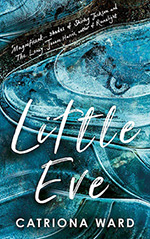
Little Eve has been on my 'want to read' list more or less since it came out. Unusually for me, the blurb caught my attention and the setting really spoke to me. A remote Scottish island, exposed to the elements in the early 20th century. Cults, murder, ritual - it certainly promised a lot, and thankfully it succeeded in meeting my expectations.
One of the interesting things reading back the promotional text is that I don't think it quite marries up with what the book is about. There is nothing massively inaccurate per se (although there is misdirection), but maybe it feels a little bit more of a crime thriller than perhaps it is, a bit more of dramatic perhaps. That's not to say that this book is a slow-burner, it demands your attention and I found I couldn't put it down but it does take it's time. Mostly told between two characters spanning a couple of decades looking back, it tells the story of a serpent worshipping cult on an island, made up of a man who controls his cult of women and children. He promises a day of reckoning where the world will be destroyed and all but them will be saved. Two of the children Eve and Dinah tell the story, one from a position of a few years after the events in the first chapter, and the other decades later.
One of the things I really appreciated was the sense of misdirection. Early in the novel I am finding I wished I paid more attention to names at the start of the novel, and at times I felt a little confused as to who was who. I don't think that's a reflection on me as a reader as I think this is quite intentional by the author. She creates a sense where you question what you read, she guides you with assumptions that turn out to be false. With multiple character perspectives shared you realise that they are unreliable, but not to the point where it is obvious. It's like walking through mist, which clears for a moment, only to shroud one's perspective again. The novel promises a dramatic twist, but you don't need to be a genius to work it out as there are plenty of breadcrumbs left for the reader to follow. I think this is a strength of the book - you are led down a path, and intentionally some of them are wrong ways to go. There are big reveals, but Ward takes us there so we are in on it, rather than surprised or shocked by it.
I suppose my only quibble from a plotting and structure level is that the placing of one character at a time and place towards the end feels just a little too implausible for me. Otherwise, we are on a bit of a whodunnit as we learn not just who killed who, but why.
The characterisation works for me. Plenty of sympathy is generated for me for the two girls at the heart of the story. Both are teenagers, who are very vulnerable and even when it is suggested that horrific crimes have been committed by one I still recognised I cared (perhaps foreshadowing that there was more to this). The characterisation of the Adder is good too. He says little but acts as a controlling, domineering force over the island, where everyone is in fear and his word is law. If he represents the 'serpent that will destroy the world' and he dominates women and children it is hard not to see him as an analogy for patriarchy, for a world obsessed with death and destruction. He is the destroyer of things. What makes this interesting for me, is that in despite the women and children of the island being controlled, they still find their somewhat independent sources of freedom. They may never affirm it and they may harm others in their group, but all of them take freedom in their own way.
There is some gore and body horror in the book and it can be quite a grisly read at times but the real horror comes in the control of the Adder towards the cult. I think this would be a challenging read and potentially triggering for anyone who has lived with, or survived domestic abuse. There is starvation, sensory deprivation, shunning, beatings, exposure to cold and various other mechanisms the Adder uses to control the cult. There is a heavy implication of rape, child abuse and sexual coercion and the threat of sexual assault. What makes it horrible is that the Adder depicts these acts, as an act of duty, of love, of care. This is horror that exists for people daily, where they doubt their own mind as they are bullied and coerced and gaslit to stay with evil people.
Whilst the Adder controls on the island, in nearby villages there are similar examples of male violence towards girls. I was left thinking that there was a monster on the island, but he was not the only one. If the first World War (when the novel starts) is swallowing all the men, then the stain of that war is felt everywhere.
I hope I will read more of Catriona Ward's work. This novel made me feel sad, made me feel angry, disgusted me at times. It was also powerful in depicting strength and a will to survive. I loved the structure as the little twists occurred and it's hard not to care about most of the characters.
Recommended.