 BigEnk
1/26/2026

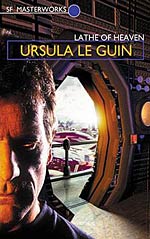
George Orr's dreams tangibly change reality. Not prophetically; he doesn't see something in a dream only for it to happen later. Rather, as he returns to consciousness, the reality outside his mind shifts instantaneously to agree with the reality of his dreams. Sometimes these changes are small. Perhaps a new picture on the wall, or a new occupation for the dreamer. But sometimes they change the fundamental framework upon which is our current timeline is based. Orr is an ethical man, developing a founded fear that his dreams are altering the lives of the unconsenting masses. It doesn't help that these "effective" dreams come up seemingly at random, so he begins to drug himself to prevent dreaming altogether.
Unfortunately, Orr becomes dependent on the drugs, and draws the attention of the authorities who assign him to a psychologist that can help him with his "delusions". It's here that we spend most of our time, as Orr becomes increasingly convinced that his psychologist, a raging egotist who has developed a machine that can induce the "effective" dreams, is using his ability to shape the world as he sees fit. Orr is overcome with a feeling of being trapped, suffocated, unable to take ownership of his life, torn between being sent to what amounts to prison or letting this man abuse him under the guise of global improvement.
The Lathe of Heaven is, in many ways, Le Guin doing PKD better than PKD sometimes does PKD. It has all of the amphetamine induced fever-dream qualities you would expect from him, with some of the humanity and deft prose work that I have come to expect from her. Her prose is often alliterative, rhythmic, and warm, which juxtaposes the often grim reality the characters find themselves in. At its core, this is a story about playing god, Taoism, and riding the wave of life. Le Guin employs a beautiful metaphor about a jellyfish that is tossed around in the ocean to describe Orr's life ethic, and it's a memorable one. While it has a lot to do with philosophy, The Lathe of Heaven never strays into being didactic. I felt left to my own devices when making my conclusions, which is always nice.
It also isn't lacking when it comes to the plot, characters, or pacing. So quick, so easy to read, so engaging. Much akin to Silverberg, though in a much different way, I always feel that I am in experienced hands when reading Le Guin's work. She balances the importance of a good story and having something worthwhile to talk about in a masterful way.
There are really only two faults I have with The Lathe of Heaven, but neither of them deter me from highly recommending it. First, I found the descriptions of how the psychologist's contraption works to be tedious after their second repetition. It's too detailed for something that's so fantastical. Likewise, there are similarly large blocks of exposition explaining the new realities that the characters find themselves within; how it has changed to agree with Orr's dreams. I wish that Le Guin had a slightly more subtle hand with these descriptions, leaving the reader to infer more about the world from hints rather than lectures. She certainly is capable of doing so, since the particulars of the aliens towards the end are more or less left completely opaque and up to reader interpretation.