 lanawritenow
2/2/2026

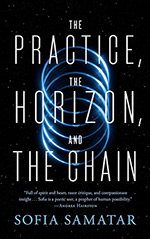
This has a dark sci-fi setting in the same tone as I Who Have Never Known Men but with a much more heavy-handed allusion to Black diaspora. It is about a young boy, chained in the hold of a spaceship with a group of people who have lived their lives in a chain-gang, only to be unlocked when their ankles grow too big for the current chain.
Despite their incarcerated existence, the boy finds freedom in art and draws narratives of hope on the walls of their prison. This love of art and philosophy draws the attention of scholars above and the boy is brought from the hold into the upper levels. This is a physically and emotionally painful experience for the boy who's only ever known the darkness of the hold and the physical proximity of his gang.
The symbolism is unashamedly confronting, it rightly doesn't hide behind complex language or world-building. But with that focus so sharp on the allegory, the shape and sound of the wider science-fiction world is blurry at the edges and weakens the strength of its intention.
It's a short and easy-to-read sci-fi mythology about incarceration and oppression in various forms, including a critique on the performance of academia. And while we don't get distinct action toward freedom, we do see the people begin to wind their hope together and the reader is left with a lingering sense of hope to build belonging.