 bazhsw
5/10/2026

This is such a captivating book that it has rested within my thoughts for a few days now. It is quite a reflective book, it is complicated, and asks the reader to empathise with actions and perspectives they will struggle to agree with but can try to understand. It is a book about trying to understand what is human, about escaping one's past and also trying to rediscover youth, a childhood that is stolen from you. On every page, I found the prose gentle, touching, and aching with loss and loneliness. It's beautiful.
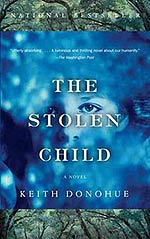
'The Stolen Child' is a book set in the mid-fifties and is the story of Henry Day. Henry is a seven year old child who runs away one day and is stolen by changelings. A changeling replaces Henry Day, and lives his life, whilst Aniday, the new name for Henry becomes a changeling and has to adjust to his new life. The book alternates chapters between Henry, who starts to remember fragments of his youth, his real youth before he was snatched and turned into a changeling, and Aniday who in turn is in a decades long adjustment to his new life.
The reason for the changelings existence is never really explained. The community of changelings in the book is around twelve, and once a child is snatched, they slowly develop changeling attributes - it isn't explained why, and some things in the novel, like changeling language and magic blend into the background until it crashes into the 'real world'. The youngest changeling is bottom of the chain in the community, and the oldest is the leader. It is the oldest that takes their next turn to steal a child and replace them, thus continuing the cycle. One can assume that a changeling can exist for a century or more, an old person trapped in a child's body until they get their release. A release that starts a cruel chain for another. The changeling is both a victim of and a perpetrator of a long cycle of loss, hardship, and forgetting. It's incredibly sad.
That doesn't mean that the changelings are not without love, care, affection and mischief. Indeed, as the book progresses they seem far less alien, and less magical which I choose to attribute to Aniday's perspective of fitting in, of the wonder becoming mundane. He is changing, he just doesn't know it.
Henry's story is no less moving. He has stolen Aniday's life, but he too must learn to fit in, must learn to be human, to reconcile who he was, with who he is. Ultimately this is a novel of change. Of letting go of a past, of becoming something and someone different. It is a novel about family, both those who are our biological family, and those families we find. It is a novel about western civilisation, encroaching on wild spaces and how the natural world is being subsumed to progress. Anyone who remembers their childhood of playing in open fields and forests where there are now houses will know this feeling well. It is a novel about colonisation, and how things which do not belong in a place, take and replace what is there without a care for what is left behind. It is about history and connection. It is about what it means to be a parent and whether it is their blood or who they are that matters most. It's about how we treat children who are 'not like us,', 'don't look like us,', 'the outsider', those differently abled.
Thematically I think people will find different things from this. Donohue doesn't hit you over the head with things, but he does give you space to feel, to reflect. It is a mature novel that has enough wonder in it to be awestruck yet feels incredibly personal and human. It is best perhaps characterised by love. Of how others see you, and how sometimes we cannot see that in ourselves.
It's such a superb book and highly recommended.