 bazhsw
6/28/2026

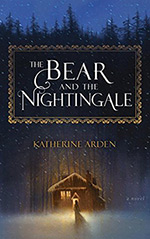
'The Bear and the Nightingale' is beautifully fantastic, a fairy tale that weaves its magic until you are completely wrapped up in the story and never want to leave.
I knew I was in for a treat with this one, where after each early chapter I wanted to pause a while, rest and let the story rest before carrying on. It's an interesting dichotomy for me in that I felt this was a page turner (a book I carried on reaching for when opportunity allowed) but also one where the author asks us not to rush, to take our time, to listen to the stories being told. The early structure of the book is masterful, as each chapter acts as an almost self-contained fairy story, or family fable. It ends and the next begins and by the time you have reached maybe the fifth or sixth chapter and are in the story proper you are fully immersed, have a full awareness of the setting, the family of the book and their position in society, their history and beliefs. It's an excellent example of world-building early without info dumping a bunch of stuff. Some of these early chapters are somewhat tangential to the main plot but act as a way of introducing later characters (or things in the next two books) without you feeling like are in a complex web of the author's creation. Playing on the tropes of fairy stories it is a gentle introduction, an invitation to walk down a wooded path where the destination is not known.
So what's the book about? It's set in or around the 14th or 15th century in what is now known as Russia and is the story of a Boyar's daughter Vasya who is attuned to seeing the folkloric creatures that protect homes and the natural world around them. If the reader is somewhat familiar with Slavic folklore they'll recognise the domovoi and the such like. Similar to Western traditions, they are the fairies who protect the home and should be offered gifts and not treated for granted. Vasya's maternal line has a strong thread of women emerging from the woods, leading to powerful men to fall in love with them whilst the politics of a feudal aristocracy conspire to elevate some and push others to the edges of society.
A major theme throughout the book (without getting into spoiler territory) is the balance between 'remembering and respecting the old ways and the old stories' and being faithful Christians in the Orthodox Church. What is interesting in the book is that there is the perfect space for the old ways and Christianity in the book and how there is no conflict between worshipping a Christian god and being respectful to those who look after hearth and home. This is until a new priest is determined to bring the glory of God to the heathens and desires to drive out the old beliefs. What is perhaps interesting here is not the choice between old ways and Christianity, but the choice between fear and trust, respect to one's own knowledge and blind faith that someone will attend to your needs.
The characterisation is very well done. You kind of know quite quickly what people are like, what motivates people, how their expectations and culture informs their actions. Even characters that are nominally the villains of the story have understandable motivations, and feel justified in their actions. Much of this isn't especially deep, but for such an engrossing story it serves the reader well.
There is a strong feminist reading of this book. Most of the male characters reinforce their patriarchal power, even when they feel they are doing good. Women and children are to be beaten if non-compliant. Women serve only one function - to be married and bred and to keep a home. If they can't do this, a life shut away in Convent in service to another master awaits. Women who are in fear are sent away, considered mad, rather than be understood but it is women who are wise, who can see beyond what's in front of them. Women who do not conform are witches, blamed for the winter, blamed for ills falling upon people. Their wildness must be tamed. The most interesting part of Vasya's character growth is her continued assertion that she will choose her own path.
The fairy tale and folkloric elements of the story weave in well amongst the wider story. There are tales by the fireside for children which serve as omens for the future. There is a magic here in everything which is there if you choose to see. One could easily read this and decide there is no magic in the world but notice the intent to create wonder in the daily life, in the environment. The natural world acts as a character. The Winter brings death and cold, but also brings people closer to home. The land is abundant but dangerous. It gives, but commands respect. The main story is effectively an ask for courage, for transition, for us to believe in ourselves.
The conclusion of the book increases the stakes, brings a sense of urgency and action to what isn't an especially demanding book. I knew it was great at the conclusion as I felt a tear well in my eye. One can spot what they need from this book but the themes that can out strongest are love, family, sacrifice and home. I'm a sucker for starting series and never seeing them through but I hope I get round to this one.
Excellent stuff.