 bazhsw
11/17/2026

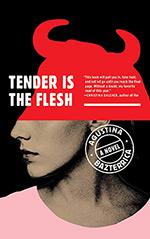
This is perhaps, the second most disturbing and harrowing book I've read (I won't mention the first because it was rubbish). It's incredibly rare that I want to put a book down due to shock or disgust but I was close many times, and on a couple of times I found myself disliking myself as a human, as a man or I just wanted to cry.
The book has so many triggers which I will list in a moment but honestly if you don't have a strong stomach for human horror then please read no further. I won't spoil anything specific in this review, but I will say that the story is quite light so any review will likely share more than intended so reader beware. I also came into this as part of a 'Vegan book club' so I did somewhat approach this from a perspective that the author may not have fully intended.
Okay, onto some triggers. This book depicts a dystopian future where animal life is largely wiped out by humans due to a deadly virus. Rather than taking the opportunity to transition to plant based foods (and really - no animal husbandry should be enough for that), the insatiable demand for meat, essentially legitimises humans raised as food. Note, these are not 'people' like you and I with names and lives, because eating 'us' is horrific isn't it? No, the humans in this setting only eat product, 'special' meat, specifically raised for slaughter for food (and just like animals in our society, 'sport', experimentation and clothing). The processing of 'heads' (the name for humans who are raised and killed) is described in incredibly graphic detail. If it can happen to animals right now, it will happen to humans in this book. The book describes detailed torture, slaughter, body horror but also shines a light on how women's bodies are controlled and used (I often think there are comparisons between how animal agriculture treats female species as breeding machines who are raped and exploited for their milk with how some in society views the role of women). Rape, torture and abuse of women is a major theme in the book. The book also has strong triggers of racism and slavery, however tangential, because the treatment of humans as products or 'heads' has strong overtones of how people have been enslaved based on an 'othering'.
I think there are some interesting cultural contexts here that the author is drawing attention to. She's shining a light on Argentinian society that has an incredibly high consumption of meat. What she is saying is, given the chance, you wouldn't transition to a plant based diet because your own needs and greed would justify any suffering. I've seen her state that 'capitalism is cannibalism' and I think her argument is important because what I think she is saying is that humans will justify any horror if their needs are met and they can continue to consume.
I guess the strongest message in the book is that once we can 'other' another people (or species) we can justify anything. The humans raised for food suffer. They have feelings. But they are never given an identity. Their tongues are removed so they can't scream. They have no agency. One can only read the news on any given day and see attempts to dehumanise and distance 'us normal people' from whoever the targeting is aimed at. This is a novel of dehumanisation and it is not hard to see how often this occurs (in the UK the language used about immigrants is a very current example).
One of the things in the novel that I think will draw criticism is it's tone. It is quite dispassionate, it's at a distance. It tells you in excruciating detail what is happening but asks you not to judge. The central character (a man who is like the top operations manager in a processing plant) is dead inside, permanently staring at the abyss of grief. I wanted to feel sympathy for him even if I didn't like him. He symbolises the emptiness of man, searching for what used to matter. With the main plot I kind of worked out what the two main pivots would be and they disgusted me when they landed, but they reinforced the key messages in the book.
I do think the novel is more about 'isn't it disgusting what we can do with people when we other them' than 'isn't it horrible what happens to animals' in industrialised societies. That said, I did wonder if my veganism made this a harder read or an easier one. There was nothing new in the opening 25 pages or so for me in the sense I know exactly how animals are treated. It's brutal, it's shocking and it disgusted me. I do wonder if the kind of people who tuck into a steak after reading this were as shocked, and if they were shocked because they were treating people like animals rather than this is cruel to animals. I suspect a lot of readers are the kind of people who are depicted in the novel. Happily carrying on, telling themselves lies.
Not to criticise others, but I read a review where someone said, 'they checked out at the puppies'. It says a lot about society that cruelty to cute baby puppies disgusts us after 200 pages of unrelenting gore and carnage of human beings. Our emotions driven by what we think is cute, rather than suffering to others.
Now this may not be your favourite holiday read but I do think it's an important book. It shines a deeply uncomfortable mirror back at us. It's lightness of plot, it's dispassionate approach asks us to notice what our lives are like. Are our lives a cycle of sex, empty gratification, greed, consumption, and work? Or are our lives searching for kindness, love, and joy?