


 Full Details





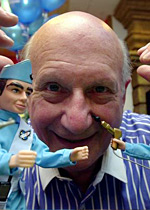
Gerry Anderson


| Full Name: | Gerald Alexander Anderson |
| Born: | April 14, 1929 West Hampstead, London, England, UK |
| Died: | December 26, 2012 Henley-On-Thames, Oxfordshire, UK |
| Occupation: | Writer, Producer, Director, Actor, Editor |
| Nationality: | British |
| Links: |
|
Biography
Gerald Alexander Anderson was an English television and film producer, director, writer and occasional voice artist, who is known for his futuristic TV series, especially his 1960s productions filmed with "Supermarionation" (marionette puppets containing electric moving parts).
Gerald Alexander Abrahams was born to Jewish parents Deborah (née Leonoff) and Joseph Abrahams in the Elizabeth Garrett Anderson and Obstetric Hospital in Bloomsbury, London. His parents had immigrated from Eastern Europe. He was raised in Kilburn, and Neasden, London. He was educated at Kingsgate Infants School in Kilburn and Braintcroft Junior and Senior schools in Neasden, prior to winning a scholarship to Willesden County Grammar School.
Anderson began his career in photography, earning a traineeship with the British Colonial Film Unit after the war. He developed an interest in film editing and moved on to Gainsborough Pictures, where he gained further experience. In 1947, he was conscripted for National Service with the RAF, and was based at RAF Manston. He served part of his time in air traffic control.
Anderson's first TV production was the 1957 Roberta Leigh children's series The Adventures of Twizzle (1957-58). Torchy the Battery Boy (1960), and Four Feather Falls (1960) followed. Supercar (1961-62) and Fireball XL5 (1962-63) came next, both series breaking into the American market in the early 1960s. In the mid-1960s Anderson produced his most successful series, Thunderbirds. Other productions of the period included Stingray, Captain Scarlet and the Mysterons and Joe 90.
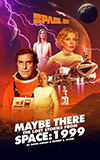
Anderson also wrote and produced several feature films, including Doppelgänger (aka Journey to the Far Side of the Sun, 1969). Following a shift towards live-action productions in the 1970s, he had a long and successful association with media impresario Lew Grade and Grade's company ITC, continuing until the second series of Space: 1999.
Works in the WWEnd Database
|
|
|
|
|
|||||||||||||||